
Description
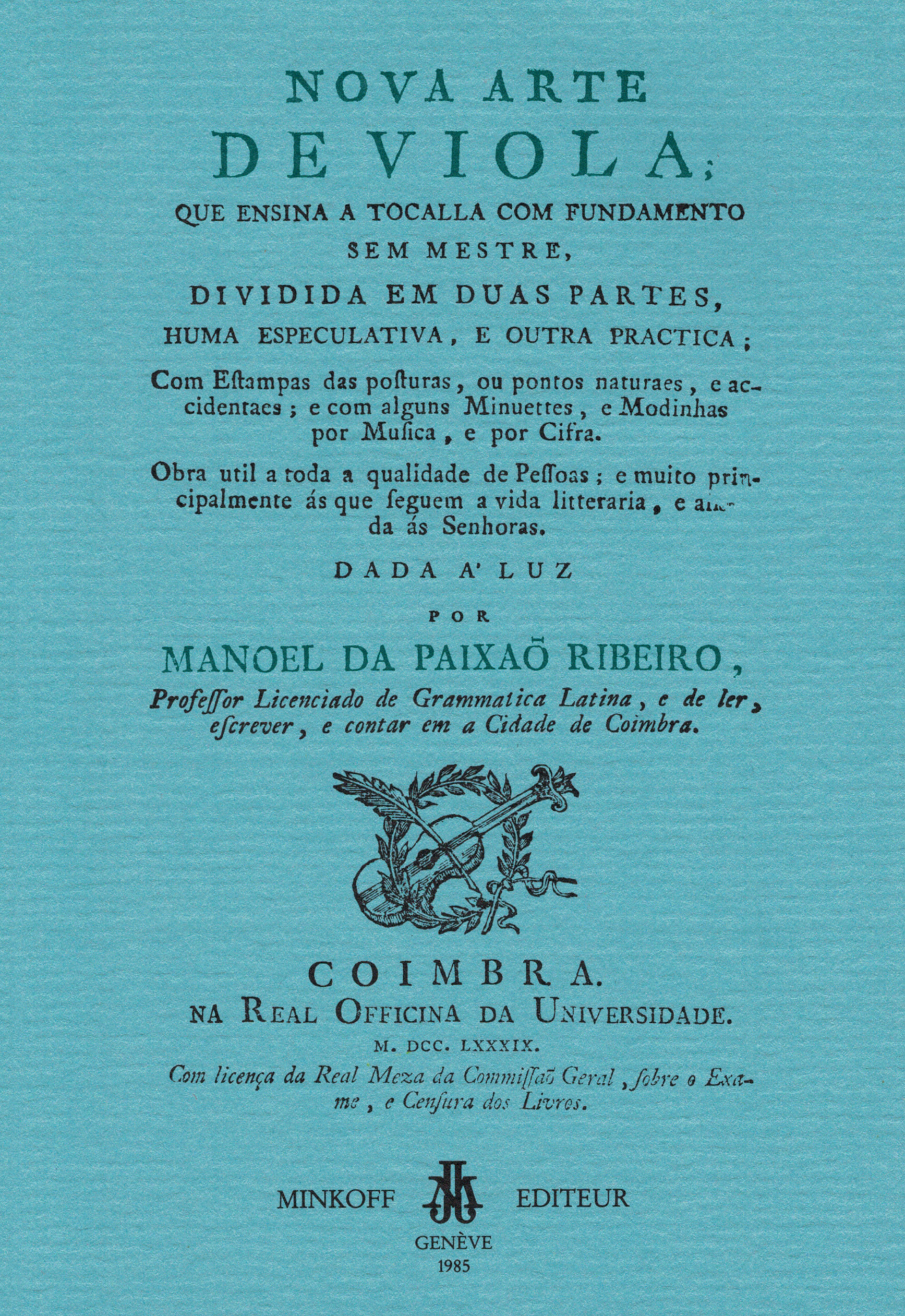
Manoel Da Paixao Ribeiro – Nova Arte de Viola, Coimbra 1789
In Manuel da Paixão Ribeiro’s Nova arte de viola, published in Coimbra in 1789, the word “viola” does not refer to the viola (alto) or the viola da gamba. Instead, it denotes a Portuguese plucked string instrument belonging to the guitar family.
More specifically:
- In eighteenth-century Portugal, the term viola was used for several types of five-course wire-strung guitars(violas de arame), rather than for a bowed instrument.
- The instrument described by Ribeiro has five courses (the exact stringing varies according to regional tradition) and is played with the fingers.
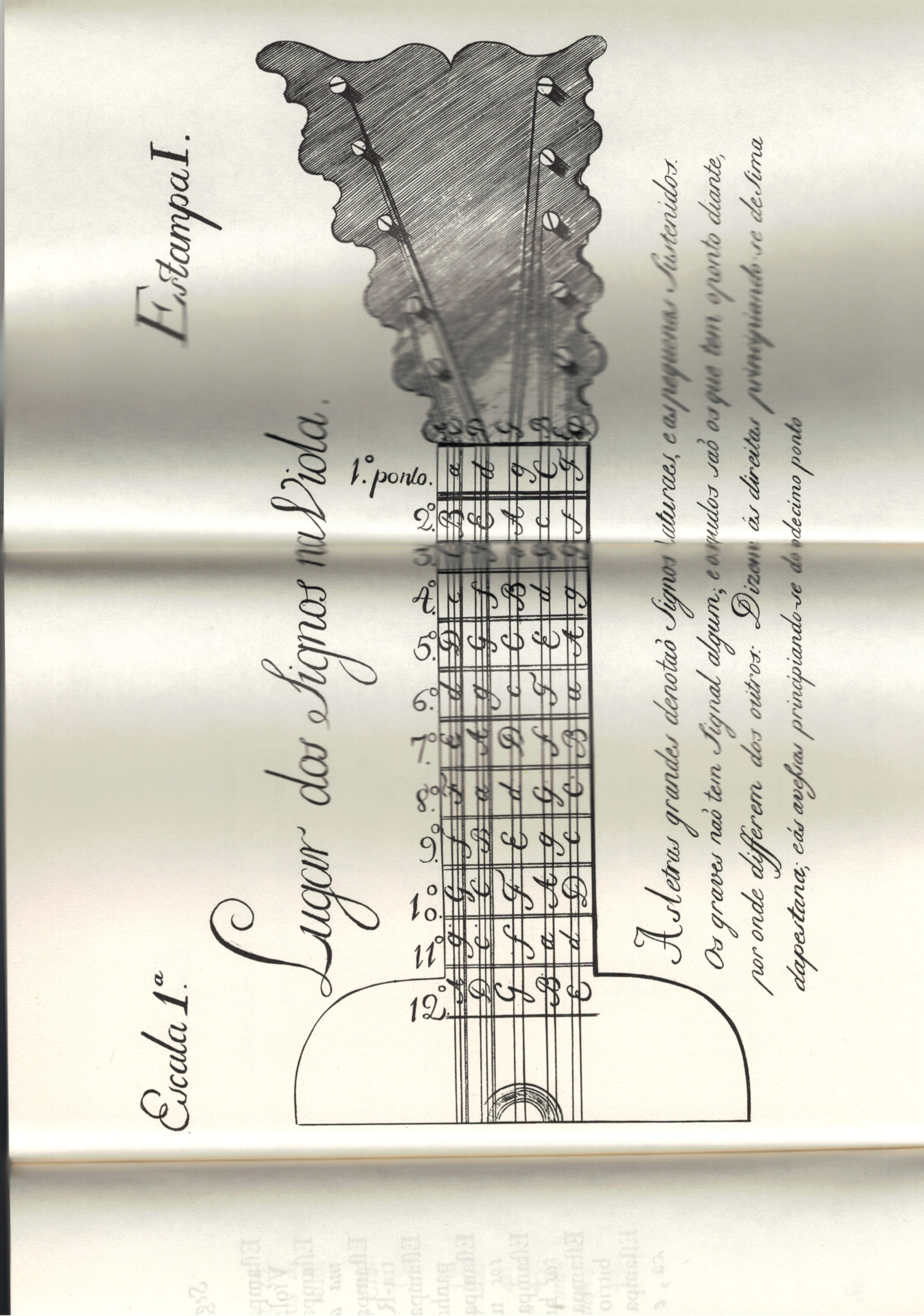
- The “posturas” (chord diagrams) reproduced in the treatise clearly depict a fretted guitar-type instrument. The subtitle also refers to teaching both staff notation and tablature (“por música e por cifra“), confirming that it is intended as a method for a plucked instrument.
Which type of viola?
Since the book was published in Coimbra, the instrument is generally identified with the Viola Toeira (also known as the Viola de Coimbra), one of the traditional regional Portuguese violas. Organological studies commonly associate Ribeiro’s method with this instrument.
Significance of the treatise
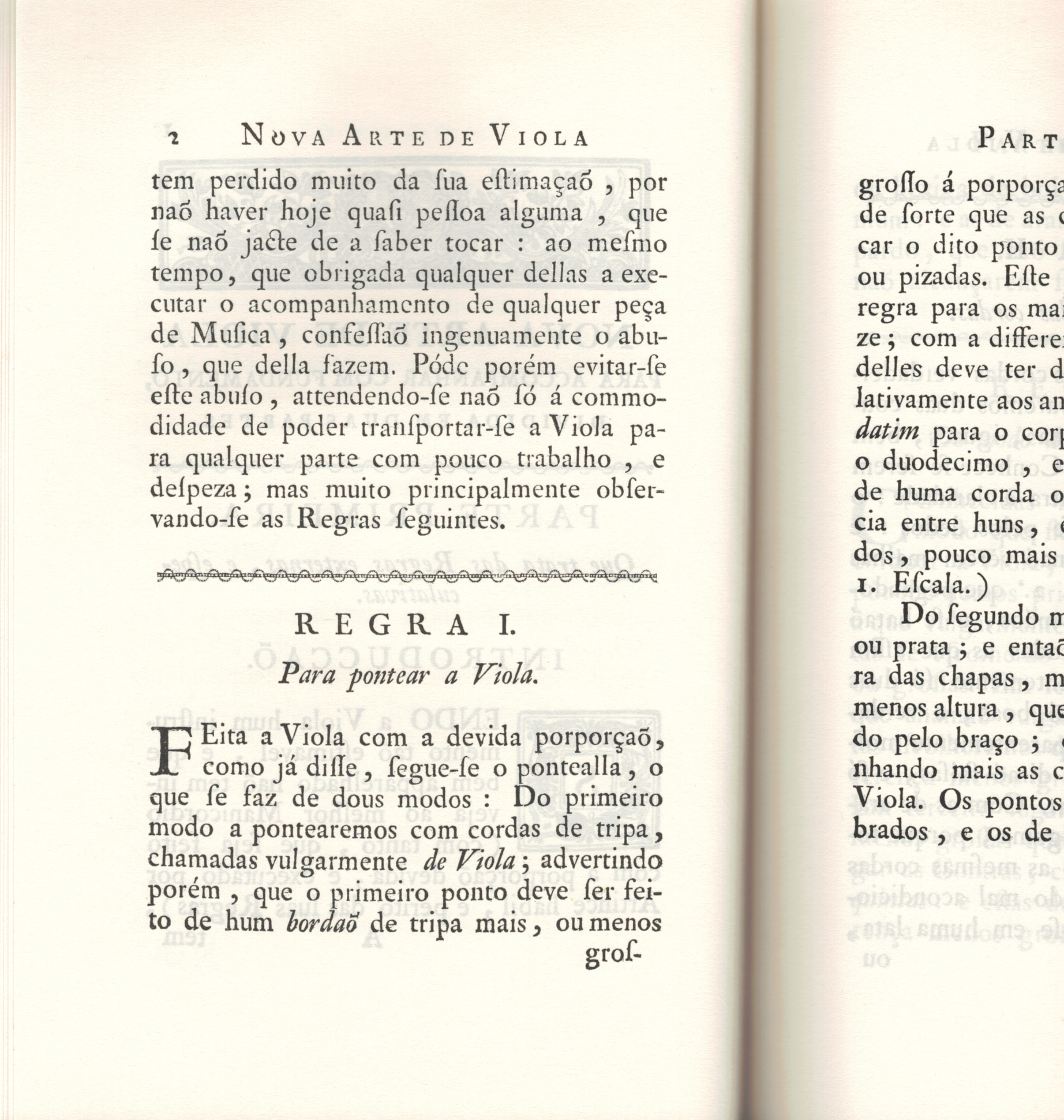
Nova arte de viola is regarded as one of the most important Portuguese tutors for the viola of the eighteenth century. It covers:
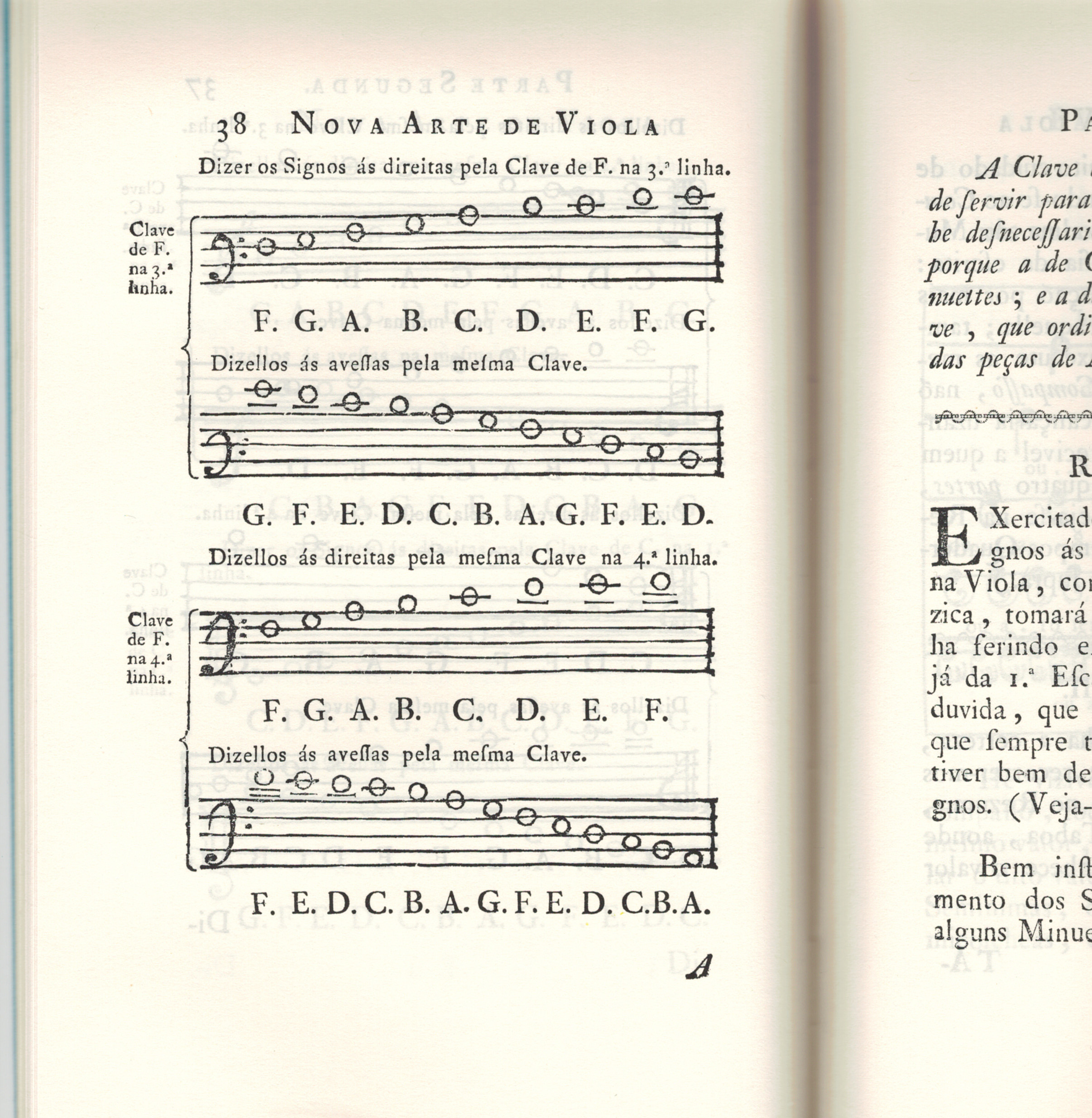
- the fundamentals of music theory,
- chord positions and harmony,
- accompaniment of minuets and modinhas,
- performance from both staff notation and tablature,
- and is expressly intended for students learning without a teacher (“sem mestre“).
For the history of the guitar, the treatise is particularly significant because it documents the transition from the Baroque five-course guitar to the later Portuguese violas and, ultimately, to the modern six-string guitar.
Mit „viola“ ist in Manuel da Paixão Ribeiros 1789 in Coimbra erschienenem Lehrbuch Nova arte de viola nicht die Viola da gamba oder die Viola (Bratsche) gemeint, sondern eine portugiesische fünfsaitige bzw. fünfschörige Zupflaute, also ein Instrument aus der Gitarrenfamilie.
Genauer gesagt:
- Im Portugal des 18. Jahrhunderts bezeichnete viola allgemein verschiedene Typen von Doppelchörigen Gitarren (violas de arame), nicht das Streichinstrument.
- Das von Ribeiro beschriebene Instrument besitzt fünf Chöre (meist zwei dreichörige und drei zweichörige oder fünf doppelte Chöre, je nach regionaler Bauform) und wird mit den Fingern gezupft.
- Die im Lehrbuch abgebildeten „posturas“ (Griffbilder) zeigen eindeutig ein Gitarreninstrument mit Bünden und Akkordgriffen. Der Untertitel spricht ausdrücklich von „pontos naturaes e accidentaes“ sowie von Musik „por música e por cifra“, also Notenschrift und Tabulatur.
Welche Bauform?
Für Coimbra handelt es sich sehr wahrscheinlich um die Viola Toeira (auch Viola de Coimbra genannt), eine regionale portugiesische Viola. Mehrere organologische Studien bringen das Instrument des Lehrbuchs mit dieser Bauform in Verbindung.
Bedeutung des Werkes
Die Nova arte de viola gilt als eines der wichtigsten portugiesischen Lehrbücher für die Viola des 18. Jahrhunderts. Sie vermittelt:
- Grundlagen der Musiklehre,
- Griffbilder und Harmonielehre,
- Begleitung von Minuetten und Modinhas,
- Spiel nach Notenschrift und Tabulatur,
- und richtet sich ausdrücklich an Lernende „ohne Lehrer“ („sem mestre“).
Für die Geschichte der Gitarre ist das Werk deshalb von großer Bedeutung: Es dokumentiert den Übergang von der barocken fünfschörigen Gitarre zu den späteren portugiesischen Violas und schließlich zur sechssaitigen Gitarre.