Description
Loaded gut basses (Type CC)
We highly recommend reading the entire text:
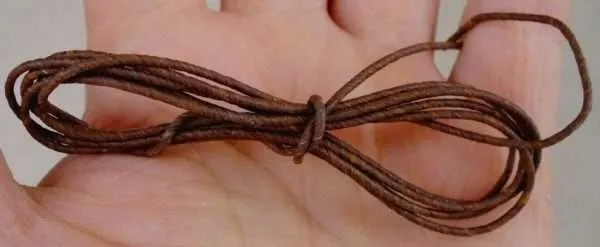
These are whole lamb gut strings that have been ‘densified’ using metallic copper powder, effectively doubling their original specific weight.
Recommended uses for Plucked Instruments: These strings are highly recommended as basses for:
-
Renaissance lutes with more than six courses (7, 8, 9, and 10).
-
17th-century 12-course Dutch lutes with a short scale length.
-
11-course D-minor lutes.
-
Fretted basses and the short scale length of Italian liuti attiorbati.
-
The fretted 6th, 7th, and 8th strings on theorbos.
Recommended Uses for Bowed Instruments: For bowed instruments, they are well-suited for viola da gamba setups from the period prior to the introduction of wound strings (around 1670–1680). They are especially ideal for violas da gamba where the vibrating string length is shorter than what the so-called “law of proportions” dictates (which accounts for the majority of modern reproduction instruments). Furthermore, they are excellent for the viola bastarda and lyra viol repertoires.
Note: They are not recommended as bass strings for the cello.
Sound characteristics & safety: The tone is full and rich, centered on the fundamental frequency. It blends seamlessly with higher gut strings—unlike wound strings, where the timbre’s difference is often too much. Finally, this type of string allows for the use of unison courses, just as John Dowland recommended in 1610.
These strings do not contain any toxic compounds based on lead or mercury salts.