Description
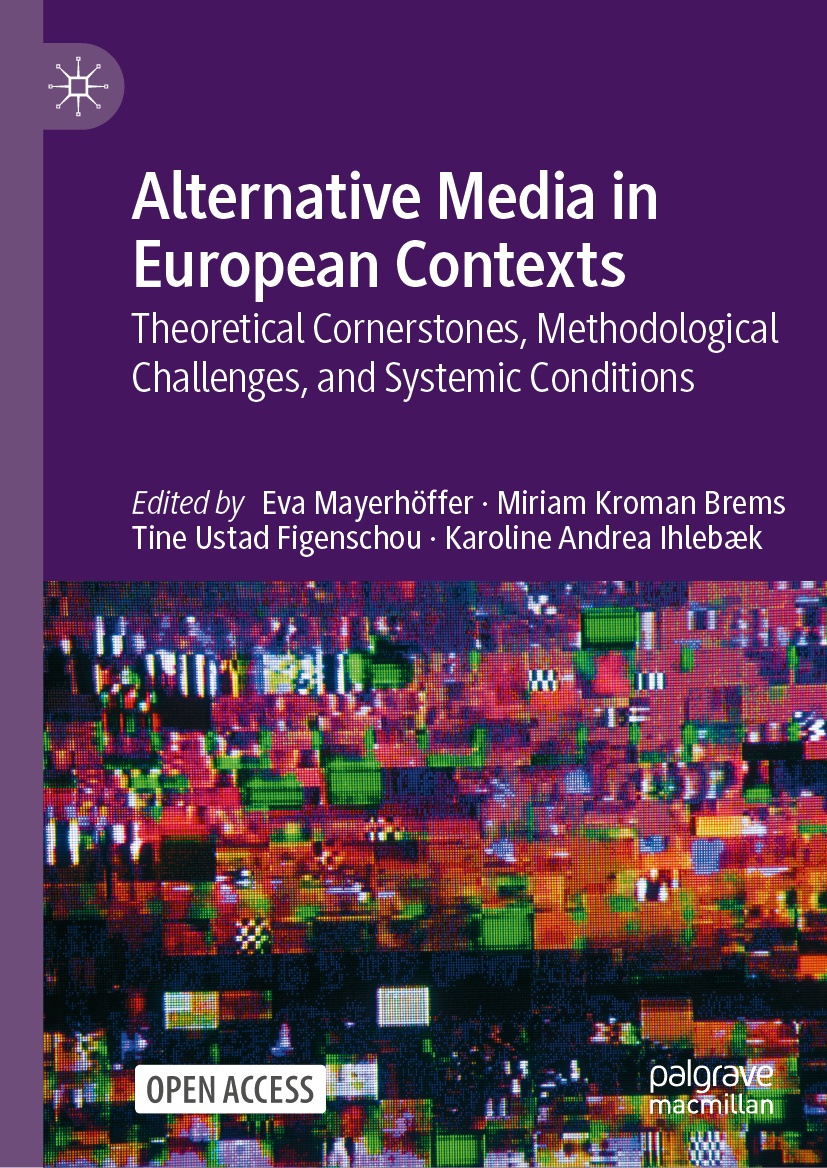
Alternative Media in European Contexts
Theoretical Cornerstones, Methodological Challenges, and Systemic Conditions
Mayerhöffer, Eva (Ed. / Hrsg.); Brems, Miriam Kroman (Ed. / Hrsg.); Figenschou, Tine Ustad (Ed. / Hrsg.); Ihlebæk, Karoline Andrea (Ed. / Hrsg.)
ISBN 978-3-032-22488-0 · Palgrave Macmillan · XIX, 384 p. 6 illus., 5 illus. in color. ·
Description / Beschreibung
Bringing together leading scholars in the field, this open access book presents novel theoretical perspectives, methodological approaches, ethical reflections and comparative frameworks to inform research on production, content, dissemination and use of alternative media. Over the last decade, falling levels of media and political trust and sweeping populist election victories have coincided with a wave of new alternative media. Seeking to challenge mainstream news media and established politics, these alternative media have attracted extensive political, media and scholarly attention.
Building on in-depth insights from different countries across Europe, it represents a key reference for alternative media research in Europe and beyond. This book demonstrates how we are now entering a third stage of alternative media research, characterized by more cross-theoretical fertilization, methodological innovation and focus on contextual conditions.
Description / Beschreibung
This book examines how the past decade’s dropping levels of media and political trust and sweeping populist election victories have coincided with a new wave of alternative media across European countries. It taps into the renewed scholarly interest in media actors that, in different ways and to different extents, challenge established news media and a perceived societal mainstream.
This edited volume further advances this (re-)emerging research field conceptually and methodologically and develop frameworks for analysis and systemic perspectives that are applicable across dissimilar national media and political contexts. In so doing, the book extends beyond the here and now of single-country case studies and lays a theoretical, methodological, and analytical foundation for better linking and integrating future empirical studies. The contributions are organized into three main sections: conceptual cornerstones, methodological challenges, and systemic conditions.
Including cases from the Northern, Central, Eastern, and Southern parts of Europe, the book showcases work from some of the leading scholars within the field of alternative media research, as well as from up-and-coming junior researchers. It is a key text in alternative media, relevant to students and scholars in media and journalism studies, political communication, audience research, cultural studies, political sociology, and related disciplines.
"This volume brings together theoretically sophisticated and methodologically rigorous perspectives on alternative media studies from crucial European scholars who have their collective fingers on the pulse of this multidisciplinary field. — Jennifer Rauch, Linfield University, U.S., author of Resisting the News: Engaged Audiences, Alternative Media, and Popular Critique of Journalism and co-editor (with Stephen Cushion) of the Routledge Handbook of Alternative and Participatory Journalism."
– Jennifer Rauch, Linfield University, USA
Contents / Inhaltsverzeichnis
.- Chapter 1. Introduction (Miriam Kroman Brems, Tine Ustad Figenschou, Karoline Andrea Ihlebæk, and Eva Mayerhöffer).- PART I: CONCEPTUAL CORNERSTONES.- Chapter 2. Conceptualizing and evaluating the democratic role of alternative media: four rival perspectives (Miriam Kroman Brems and Eva Mayerhöffer).- Chapter 3. Friends, foes, or it depends? Toward a liberal-democratic normative framework for assessing political alternative media (Jesper Strömbäck).- Chapter 4. Critique beyond the status quo: Alternative media as challengers of social power(Steffen Göths).- Chapter 5. Alternative media logic? An intermedial approach (Kristoffer Holt and BeateSchirrmacher).- Chapter 6. Conceptualizing alternative news use(rs) from a recognition-theoretical perspective(Leif Hemming Pedersen).- Chapter 7. Examining the expressive and social facets of alternative media use: A conceptualframework informed by social identity theory and fan studies (Clara Juarez Miro).- Chapter 8. How counter-authorities challenge epistemic understandings of knowledge: A crisisof truth or a crisis of trust? (Salla Tuomola).- PART II: METHODOLOGICAL CHALLENGES.- Chapter 9. Studying alternative news in an ethical manner: Challenges and best practices (LenaFrischlich and Heidi Schulze).- Chapter 10. Giving voice to radical and extreme actors? Risk assessment, normativity, andethical considerations (Tine Ustad Figenschou and Karoline Andrea Ihlebæk).- Chapter 11. How do we capture the user-perspective? Strategies for recruiting and interviewingusers of alternative media (Miriam Kroman Brems).- Chapter 12. Measuring alternative media use. Considerations on channel-based and selfperceived measurements and their implications (Lena Zils, Florian Wintterlin, Julia Metag, NielsG. Mede, and Mike S. Schäfer).- Chapter 13. Analyzing alternative media with digital trace data (Jakob Bæk Kristensen andErnesto de León).- Chapter 14. Accessing and assessing the content of alternative media: Content analysis andtopic modeling (Philipp Müller).- Chapter 15. The political economy of alternative media: Exploring ownership and organizational frameworks (Ane Mestvedthagen).- PART III: SYSTEMIC CONDITIONS.- Chapter 16. Alternative news ecosystems in context: Relating political, media and culturalconditions to alternative news media supply and demand (Annett Heft and Eva Mayerhöffer).- Chapter 17. Activist journalism: alternative media and conditions for social change (LinaMoscoso Teixeira).- Chapter 18. Contestations, resources, and social skills: Understanding alternative news mediaand its relation to journalism through a strategic action field approach (Karoline Andrea Ihlebækand Tine Ustad Figenschou).- Chapter 19. Why the journalistic dimensions of media systems shape the character ofalternative media (Stephen Cushion).- Chapter 20. Alternative social media as new opportunity structures for alternative news (LenaFrischlich).- Chapter 21. Alternative, citizen, or amateur media? Telegram channels as news sources in thecontext of war (Nataliia Steblyna and Liubov Vasylyk).- Chapter 22. Conclusion (Eva Mayerhöffer, Karoline Andrea Ihlebæk, Tine Ustad Figenschou, and Miriam Kroman Brems).
Contributors / Mitwirkende
Eva Mayerhöffer is Associate Professor of Political Journalism and Comparative Media Studies at Roskilde University, Denmark.
Miriam Kroman Brems is Postdoctoral Researcher at Aarhus University, Denmark.
Tine Ustad Figenschou is Professor of Journalism at Oslo Metropolitan University, Norway.
Karoline Andrea Ihlebæk is Professor of Journalism at Oslo Metropolitan University, Norway.
Features / Besonderheiten
This book is open access, which means that you have free and unlimited access Fills a gap in the market for comprehensive book-length studies of the rise of alternative media
Comprises contributions from researchers and cases from Northern, Central, Eastern, and Southern Europe Provides an interdisciplinary crossover of media, journalism, political communication, and political sociology